
How to Tell If a Part Fits Your Car: A Comprehensive Guide
Share this article
Discover how to identify the right parts for your vehicle. Our guide helps you avoid costly errors by ensuring proper fitment using VIN and other methods.
Choosing the right part for your car is crucial, not only for the vehicle's performance but also for your safety. If you've ever found yourself puzzled over whether a part will fit your car, you're not alone. Understanding how to verify part compatibility can save you time, money, and a lot of frustration. In this guide, we'll walk you through the steps to ensure that you choose the right parts for your vehicle every time.
Need the Correct Replacement Part?
Partix helps drivers find OEM, aftermarket, and recycled parts using VIN-based fitment verification. Search by VIN, compare pricing, and find the right part before you buy.
Search Parts on Partix.co →Table of Contents
- Overview
- Cost Considerations
- Common Fitment Issues
- Causes of Fitment Problems
- Repair and Replacement Options
- DIY vs. Professional Installation
- Parts Pricing and Comparison
- Expert Recommendations
- Frequently Asked Questions
- Final Thoughts
Overview
Understanding if a part fits your car involves more than just matching the shape and size. It requires knowledge of your vehicle's specifications, which are unique to its make, model, and year. Here's how you can start:
1. Use the VIN: Your vehicle's VIN (Vehicle Identification Number) is a unique code that acts like your car's fingerprint. It can provide detailed information about your vehicle, helping to ensure the parts you select are compatible.
2. Check the Owner's Manual: Often overlooked, the owner's manual provides valuable insights into what parts work best for your vehicle.
3. Consult Online Databases: Websites and apps dedicated to car parts often have databases where you can check part compatibility using your car's details.
Cost Considerations
Choosing the wrong part can be costly. Not only could you waste money on a non-refundable purchase, but incorrect parts can also lead to further damage. Here’s a cost breakdown:
| Part Type | Average Cost | Potential Issues with Wrong Fit |
|---|---|---|
| Brake Pads | $50 - $150 | Reduced braking efficiency, damage to rotors |
| Oil Filter | $10 - $30 | Oil leaks, engine damage |
| Alternator | $200 - $600 | Battery drain, electrical issues |
Common Fitment Issues
Fitment issues often arise from a lack of understanding of the vehicle's specifications or using unreliable sources for parts. Some common issues include:
- Incorrect Part Numbers: Parts often have similar numbers that can easily be confused.
- Assumption of Universal Fit: Not all parts are made to fit every car, even within the same brand.
- Ignoring Vehicle Modifications: Aftermarket modifications can change how parts fit.
Causes of Fitment Problems
Several factors can lead to fitment issues:
- Model Variations: Different model variations might require different parts.
- Year-Specific Changes: Manufacturers often update parts specifications yearly.
- Aftermarket Parts: While these can be cost-effective, they may not always fit as seamlessly as OEM parts.
Repair and Replacement Options
Once you have verified the part's fitment, you can consider the repair or replacement options available to you:
- OEM Parts: Original Equipment Manufacturer parts are designed to fit perfectly, though they may be more expensive.
- Aftermarket Parts: These can be a cheaper alternative, but require careful selection to ensure compatibility.
DIY vs. Professional Installation
Deciding between DIY installation and professional service can depend on your confidence and the complexity of the part.
- DIY: Suitable for simple parts like filters or brake pads, requiring basic tools and knowledge.
- Professional: Recommended for complex or safety-critical components like alternators or suspension parts.
Parts Pricing and Comparison
Comparing prices can also help you make informed decisions. Here's a comparison table showing the price differences between OEM and aftermarket parts:
| Part Type | OEM Price | Aftermarket Price |
|---|---|---|
| Brake Pads | $120 | $60 |
| Oil Filter | $25 | $15 |
| Alternator | $500 | $250 |
Expert Recommendations
To ensure the right fit every time, consider these expert tips:
- Use Reliable Sources: Always purchase from reputable retailers and check the return policy.
- Double-Check Fitment Guides: Use VIN-based tools and databases to verify part compatibility.
- Consult Professionals: When in doubt, seek professional advice to avoid costly mistakes.
Need the Correct Replacement Part?
Partix helps drivers find OEM, aftermarket, and recycled parts using VIN-based fitment verification. Search by VIN, compare pricing, and find the right part before you buy.
Search Parts on Partix.co →Frequently Asked Questions
How do I know if a part will fit my car?
To ensure a part fits your car, use the vehicle's VIN for accurate compatibility checks, consult your owner's manual, or use online part compatibility tools.
What is VIN and how does it help in part fitment?
A Vehicle Identification Number (VIN) is a unique code that can be used to identify a car's specifications and ensure parts compatibility.
Are OEM parts better than aftermarket?
OEM parts are generally more reliable and ensure perfect fit, while aftermarket parts may offer savings but can vary in quality and compatibility.
How can I avoid buying the wrong car part?
Verify part numbers, use VIN-based tools, and consult with trusted auto parts retailers to avoid purchasing incompatible parts.
Final Thoughts
Ensuring the right fit for car parts is essential for maintaining vehicle performance and safety. By using reliable methods such as VIN checks and consulting with professionals, you can avoid the pitfalls of incorrect part purchases. Remember, the right information and tools can save you from unnecessary expenses and ensure your vehicle runs smoothly.
Need the Correct Replacement Part?
Partix helps drivers find OEM, aftermarket, and recycled parts using VIN-based fitment verification. Search by VIN, compare pricing, and find the right part before you buy.
Search Parts on Partix.co →Frequently Asked Questions
How do I know if a part will fit my car?
To ensure a part fits your car, use the vehicle's VIN for accurate compatibility checks, consult your owner's manual, or use online part compatibility tools.
What is VIN and how does it help in part fitment?
A Vehicle Identification Number (VIN) is a unique code that can be used to identify a car's specifications and ensure parts compatibility.
Are OEM parts better than aftermarket?
OEM parts are generally more reliable and ensure perfect fit, while aftermarket parts may offer savings but can vary in quality and compatibility.
How can I avoid buying the wrong car part?
Verify part numbers, use VIN-based tools, and consult with trusted auto parts retailers to avoid purchasing incompatible parts.
What tools can help in verifying part fitment?
Online VIN decoders, manufacturer websites, and parts databases are useful tools for verifying part compatibility with your vehicle.
Why is part fitment important?
Correct part fitment ensures optimal performance, safety, and durability of your vehicle, while preventing damage and costly repairs.
How does using VIN improve part selection?
Using VIN provides precise vehicle details, minimizing errors in part selection by ensuring compatibility with the vehicle's make, model, and year.
Can I rely on universal parts for my car?
Universal parts may fit various vehicles but often lack the precision of OEM parts, potentially leading to suboptimal performance or compatibility issues.
What should I do if a part doesn't fit?
If a part doesn't fit, consult the seller's return policy, and use tools like Partix.co to find the correct part by verifying compatibility accurately.
Is professional installation recommended?
Professional installation ensures parts are fitted correctly, especially for complex components, reducing the risk of damage and ensuring reliability.
Share this article
You Might Also Like
Infiniti Q60 3.0t Common Problems: An In-Depth Guide for Atlanta Drivers
How to Buy a Used Door in the Right Color
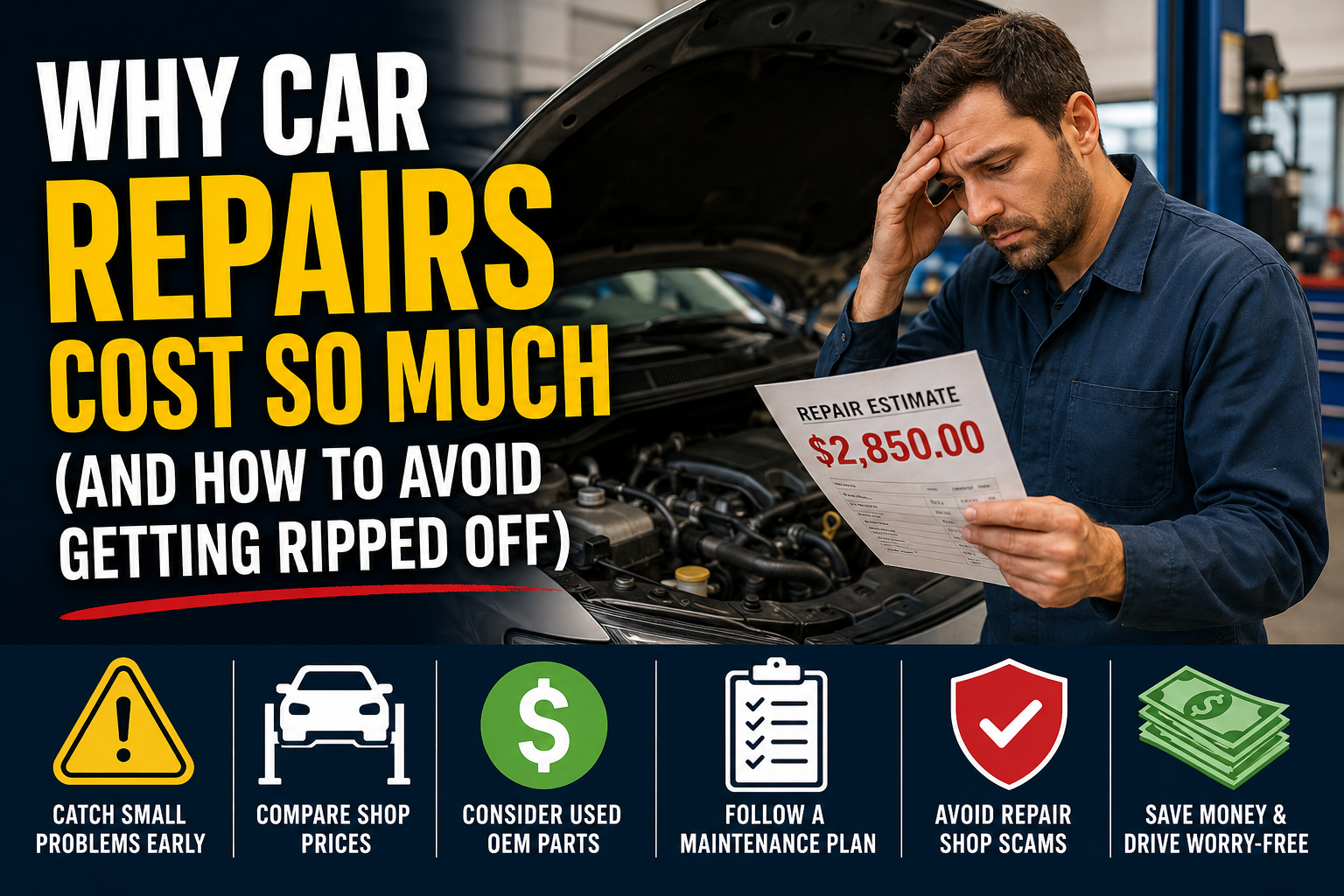
Why Car Repairs Cost So Much (And How to Avoid Getting Ripped Off)
Audi A6 Common Problems: Repair Costs and Solutions in Atlanta, GA