Why Car Repairs Cost So Much (And How to Avoid Getting Ripped Off)
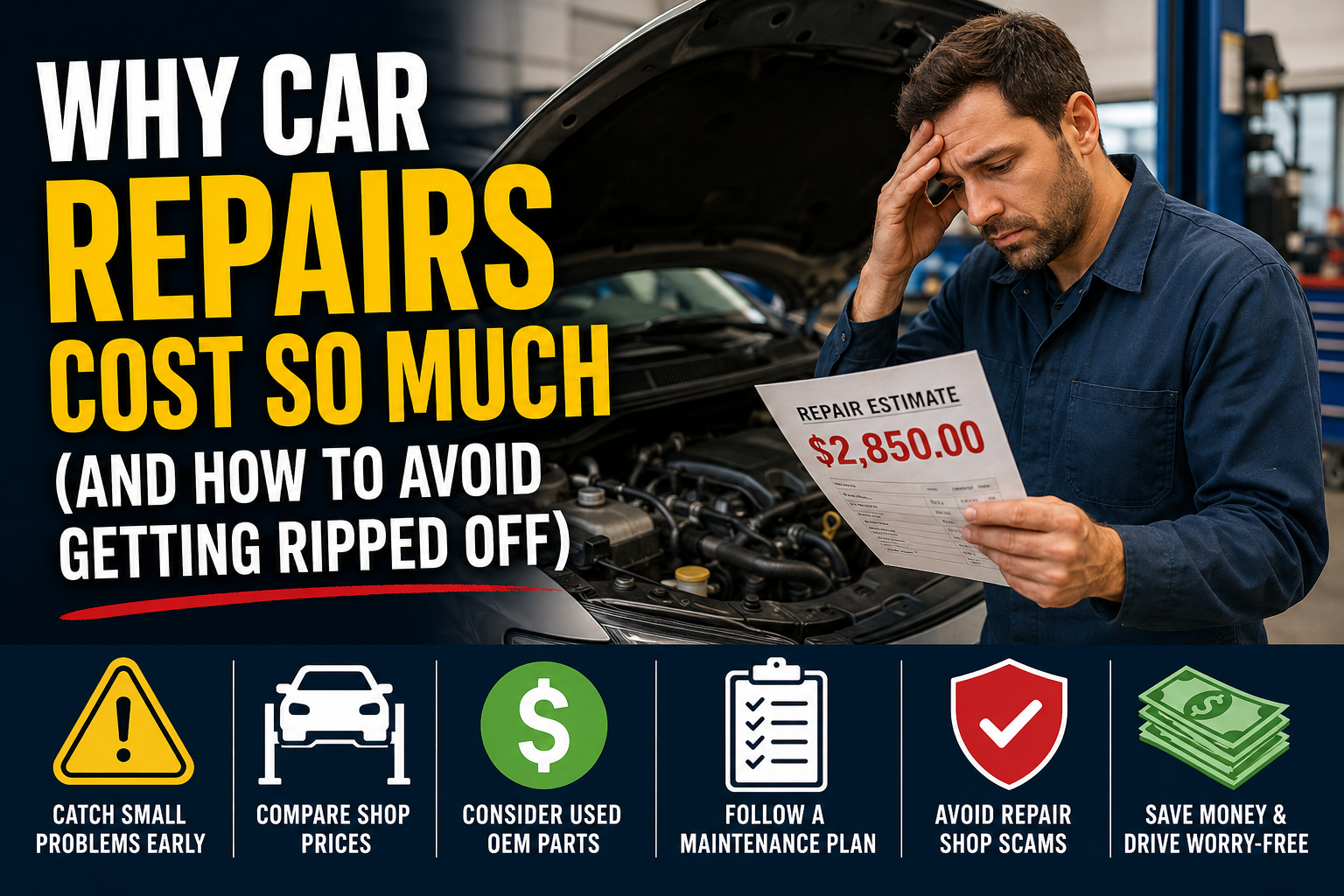
Learn why car repairs cost so much and discover practical ways to save money. From avoiding common repair shop scams to using quality OEM used parts and staying ahead of maintenance, this guide helps vehicle owners reduce repair costs and keep their cars on the road longer.
Why Car Repairs Cost So Much (And How to Avoid Getting Ripped Off)
Nobody wakes up excited to spend money on car repairs.
Unfortunately, the average vehicle on American roads is older than ever, which means more breakdowns, more maintenance, and more unexpected repair bills. According to industry data, Americans spend billions of dollars every year on vehicle repairs and maintenance.
The good news? Many expensive repairs can be avoided—or at least significantly reduced—if you know what to look for.

The $50 Problem That Becomes a $5,000 Problem
Most major automotive failures start small.
- A coolant leak can become a blown head gasket.
- A worn brake pad can destroy rotors and calipers.
- A transmission fluid leak can result in complete transmission failure.
- A bad wheel bearing can damage suspension components.
- A neglected oil leak can lead to engine damage.
One of the biggest mistakes drivers make is ignoring symptoms because the vehicle still seems to drive normally. Strange noises, vibrations, warning lights, burning smells, and fluid leaks should never be ignored.
The earlier a problem is diagnosed, the less expensive it usually becomes.
Why Labor Costs Are So High
Many vehicle owners are shocked when they see labor rates exceeding $100 to $200 per hour.
What many people don't realize is that repair facilities have significant overhead costs:
- Diagnostic equipment
- Building expenses
- Insurance
- Employee training
- Specialized tools
- Software subscriptions
- Warranty coverage
Modern vehicles are essentially computers on wheels, requiring advanced diagnostic systems and highly trained technicians.
Dealership vs Independent Repair Shop
| Factor | Dealership | Independent Shop |
|---|---|---|
| Labor Rates | Higher | Usually Lower |
| OEM Parts | Always Available | Often Available |
| Specialized Brand Knowledge | Excellent | Varies |
| Repair Costs | Typically Higher | Often Lower |
| Used Parts Options | Rarely Offered | Frequently Offered |
Before approving any repair over $500, consider obtaining a second opinion. A simple comparison can save hundreds or even thousands of dollars.
The Hidden Cost of Ignoring Maintenance
Routine maintenance isn't exciting, but it is significantly cheaper than major repairs.
- Oil changes
- Transmission services
- Coolant flushes
- Brake inspections
- Tire rotations
- Battery testing
- Air filter replacement
Think of maintenance as insurance for your vehicle. Spending a small amount today often prevents much larger expenses tomorrow.
Common Repairs That Shock Drivers
| Repair | Typical Cost Range |
|---|---|
| Engine Replacement | $3,500 - $10,000+ |
| Transmission Replacement | $2,500 - $8,000+ |
| Air Conditioning System | $800 - $3,000+ |
| Timing Chain Repair | $1,000 - $4,000+ |
| Suspension Overhaul | $500 - $4,000+ |
| Hybrid Battery Replacement | $2,000 - $8,000+ |
Costs vary based on vehicle make, model, labor rates, and geographic location.
Used OEM Parts Can Save Thousands
One of the best-kept secrets in the automotive industry is the value of recycled OEM parts.
Original equipment manufacturer (OEM) parts removed from donor vehicles often provide factory fitment and reliability at a fraction of the cost of buying new.
Commonly purchased used parts include:
- Doors
- Fenders
- Hoods
- Mirrors
- Tail lights
- Headlights
- Engines
- Transmissions
- Wheels
- Interior trim
- Seats
For cosmetic and structural repairs, used OEM parts can reduce repair costs by 30% to 70%.
Repair Shop Red Flags
Not all repair facilities operate with the same level of transparency.
Be cautious if a shop:
- Refuses to provide a written estimate
- Cannot explain the diagnosis
- Uses pressure tactics
- Suggests replacing numerous unrelated components
- Won't show the failed part
- Provides vague pricing
A reputable repair facility should be willing to explain the issue, provide documentation, and discuss repair options.
How to Protect Yourself
- Request a written estimate before repairs begin.
- Ask questions until you understand the repair.
- Research common pricing online.
- Get multiple quotes for major repairs.
- Keep maintenance records.
- Address small problems early.
- Ask whether used OEM parts are available.
The Cheapest Repair Is Prevention
The most affordable repair is the one you never need.
Simple habits can dramatically extend the life of your vehicle:
- Check fluid levels monthly.
- Listen for unusual noises.
- Monitor tire wear.
- Follow manufacturer maintenance schedules.
- Address warning lights immediately.
- Inspect for leaks regularly.
These habits can save thousands of dollars over the life of your vehicle.
Final Thoughts
Cars are expensive enough without unnecessary repairs.
Whether you drive a compact commuter car, a pickup truck, or a luxury SUV, understanding basic maintenance and repair principles can help you avoid costly mistakes and keep more money in your pocket.
Knowledge is one of the most valuable tools any vehicle owner can have. The more informed you are, the less likely you are to overpay—and the more likely your vehicle will stay on the road for years to come.
Looking for affordable replacement parts? Browse our repair guides and money-saving resources at CheapAuto.pro to learn how to reduce repair costs without sacrificing quality.